Kitchen Backsplash Installation in the Quad Cities
A kitchen backsplash protects the wall behind the counters while giving the room one of its most visible design details. We install and replace kitchen backsplashes throughout the Quad Cities, from straightforward subway tile to glass, mosaic, porcelain and natural-stone designs, with careful layout around cabinets, outlets, corners, windows and countertops.
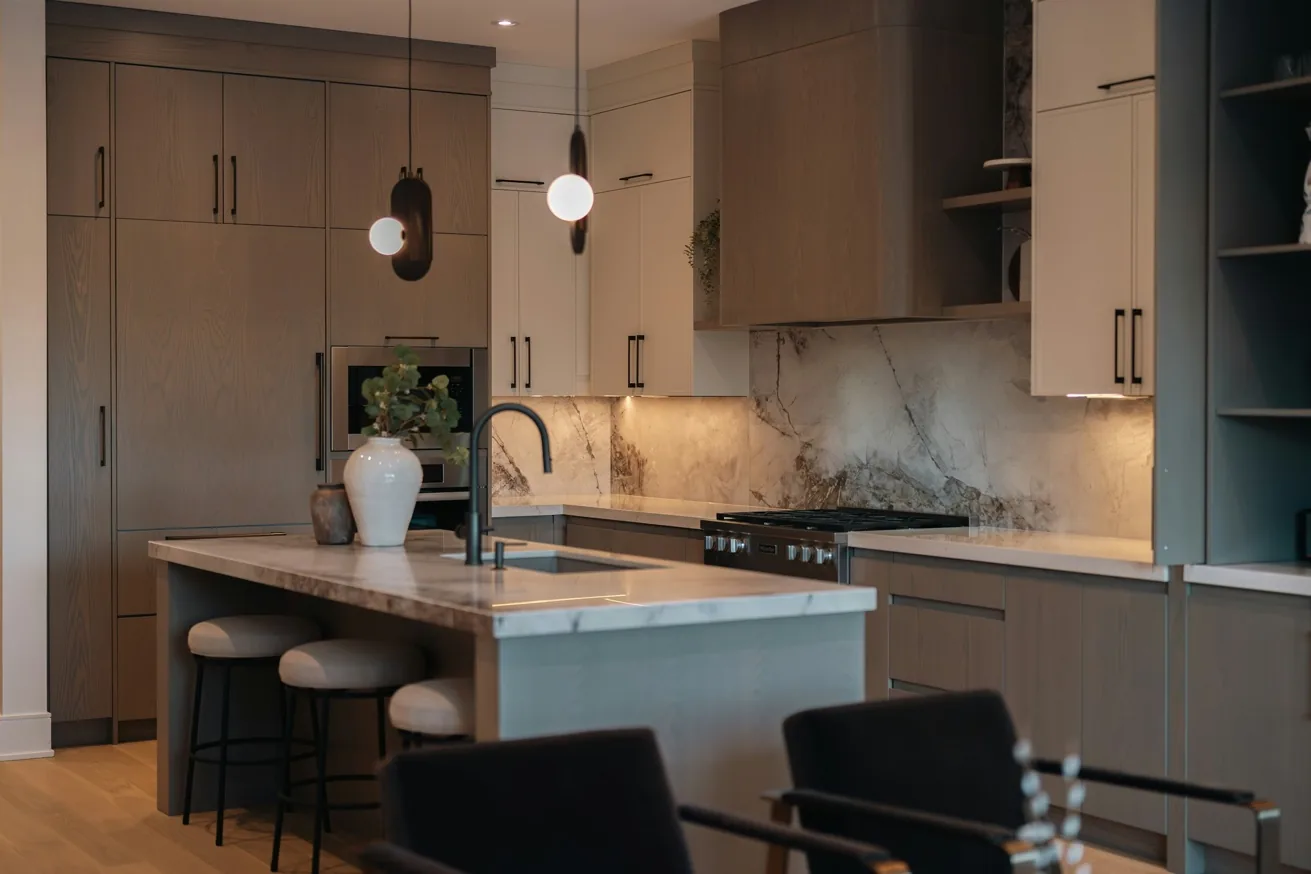
A backsplash project can stand alone when the cabinets and countertops are staying, or it can be the finishing stage of a larger kitchen remodel. The best installation starts before the first tile is set: the material, pattern, grout, starting point, outlet locations and transitions all affect how the finished wall looks. If cabinets or countertops are changing too, see Kitchen Cabinet Installation & Replacement and Kitchen Countertop Installation & Replacement. For a full-room project, start with Kitchen Remodeling.
Kitchen Backsplash Installation Services
Backsplash work can be sized to the actual kitchen rather than forcing a full remodel when one is not needed. Common projects include:
- New kitchen backsplash installation: tile the wall area between the countertop and upper cabinets or another planned backsplash zone.
- Backsplash replacement: remove an outdated or damaged backsplash and install a new material and pattern.
- Subway tile: classic rectangular tile in stacked, running-bond, herringbone or other layouts.
- Porcelain and ceramic tile: practical choices available in many sizes, colors, textures and patterns.
- Glass tile: reflective surfaces that can brighten a kitchen and work well in mosaics and accent designs.
- Mosaic backsplashes: smaller-format pieces arranged in patterns, including geometric, hexagon and mixed-material designs.
- Natural stone: marble, travertine, slate and other stone products where the appearance and maintenance fit the kitchen.
- Full-height backsplashes: extend the material above the standard counter-to-cabinet area for a stronger visual statement.
- Tile layout and dry fitting: plan the pattern before setting material so cuts, corners and focal points land intentionally.
- Outlet and switch cuts: precise cuts around electrical boxes and cover plates.
- Corner and cabinet transitions: finish exposed ends, inside corners and transitions to windows or adjacent walls cleanly.
- Grout selection and installation: coordinate grout color, joint width and material requirements with the tile.
- Sealing where appropriate: protect natural stone or grout when the selected products call for it.
- Old backsplash removal: remove existing tile when the substrate and project scope require replacement rather than installation over the old surface.
Choosing the Right Backsplash Tile
The best backsplash is not simply the tile that looks good in a showroom. It has to work with the countertop, cabinets, lighting, grout, wall condition and amount of cooking and cleaning the kitchen sees.
Ceramic and porcelain provide a broad range of colors, shapes and finishes. Porcelain is especially useful when you want a durable tile with a stone or larger-format appearance. Ceramic can be an economical and highly flexible backsplash choice.
Glass tile can reflect light and make a smaller or darker kitchen feel brighter. It also makes installation details more visible, so straight lines, clean cuts and the right adhesive matter.
Natural stone brings genuine variation and texture. Marble, travertine and slate can look excellent with traditional or transitional kitchens, but the particular stone needs to be evaluated for porosity, staining and sealing requirements.
Mosaic tile is useful when you want pattern without relying on a complicated custom cut. Mesh-backed sheets can speed installation, but sheets still need to be aligned carefully so individual pieces do not drift from one another.
Large-format tile can create a cleaner, quieter wall with fewer grout joints. It can also require more careful wall preparation because unevenness becomes easier to see across a large piece.
Backsplash Layout Matters More Than Most Homeowners Expect
A backsplash is a relatively small surface, but it contains a surprising number of interruptions: outlets, switches, corners, windows, cabinet ends, range hoods and changes in counter height. A good layout accounts for those interruptions before installation begins.
The goal is not simply to start at one end and work toward the other. A professional layout considers where the most visible cuts will land, whether the pattern will remain centered, how the tile meets a corner and whether an exposed edge needs a finished trim piece. Around outlets, the tile should be cut so the cover plate finishes the opening cleanly rather than leaving awkward gaps.
Pattern choice changes the amount of cutting as well. Straight-set subway tile is relatively predictable. Herringbone, diagonal patterns, mosaics and mixed-size layouts require more planning because small errors can become obvious as the pattern progresses.
Can a New Backsplash Go Over Existing Tile?
Sometimes, but it depends on the existing surface. The old backsplash needs to be sound, firmly attached, reasonably flat and compatible with the installation system being used. A loose, cracked, greasy or heavily uneven surface is not a good foundation for simply adding another layer.
Removing an old backsplash can reveal drywall or another substrate that needs repair before new tile is installed. It can also expose old adhesive, damaged paper, uneven patches or areas around outlets that need attention. The right approach is determined by the actual condition of the wall, not simply by whether the old tile looks dated.
For homeowners trying to keep a kitchen renovation focused, this distinction matters. A backsplash-only project can be straightforward when the wall is sound.
Backsplash Installation and New Countertops
When both the countertop and backsplash are being replaced, sequencing matters. The countertop establishes the finished horizontal line where the backsplash begins, so the countertop should generally be installed and settled before the final backsplash layout is established.
This is particularly important with new kitchen countertops. A wall may not be perfectly straight, and a countertop may have a small variation along its run. The backsplash should follow the finished counter rather than an assumed line from the original construction.
If cabinets are also being replaced, the normal sequence is even more important: cabinets are installed and leveled, the countertop is templated and installed, and the backsplash is then fitted to the finished conditions. This prevents a beautiful tile pattern from being forced to accommodate a cabinet or countertop change made afterward.
What Does Kitchen Backsplash Installation Cost?
Backsplash pricing varies because the square footage is only one part of the job. Tile material, pattern, wall preparation, number of outlets, corners, windows, trim pieces, removal and the complexity of the installation all affect the finished price. These figures are market references rather than Quad Cities quotes; a local estimate should be based on the actual wall area and material.
A useful estimate should clarify whether it includes:
- Tile and setting materials
- Surface preparation
- Removal of an existing backsplash
- Outlet and switch cuts
- Trim or finished edge pieces
- Grout
- Sealing where required
- Caulk at appropriate changes of plane
- Countertop or cabinet protection
- Cleanup and disposal
Comparing only the labor number can be misleading. Two installers can quote the same kitchen but include different amounts of wall preparation, demolition, trim, grout or finishing.
Remodeling Across the Quad Cities
Housing age and room layouts vary throughout the region. For community-specific context, see the dedicated pages for Davenport, Bettendorf, Moline, Rock Island, East Moline, Silvis, Milan, Eldridge and LeClaire.
Questions Homeowners Ask About Backsplashes
How long does it take to install a kitchen backsplash?
Many standard backsplash projects can be completed in a relatively short installation window, but timing depends on wall preparation, tile size, pattern, number of cuts and grout or sealer curing requirements. A small straightforward backsplash is very different from a full-height stone installation with many outlets and corners.
Can I install a backsplash without remodeling my whole kitchen?
Yes. A backsplash is one of the most contained kitchen upgrades. If the cabinets and countertops are in good condition, replacing the backsplash can change the appearance of the room without replacing everything else.
Should the backsplash be installed before or after the countertop?
When both are new, the countertop generally comes first. The backsplash can then be laid against the actual finished countertop line, which is especially important when the wall is not perfectly straight.
Can you install tile around electrical outlets?
Yes. Outlets and switches require precise tile cuts and sometimes adjustments to the finished box or cover arrangement. The goal is a clean opening that is properly covered once the electrical devices and plates are reinstalled.
Is subway tile still a good choice?
It remains a versatile option because it can be installed in several patterns and works with traditional, transitional and modern kitchens. The visual result depends heavily on tile proportion, grout color, joint consistency and the surrounding cabinets and counters.
What backsplash is easiest to clean?
Smooth, glazed ceramic and porcelain surfaces are generally easy to wipe down. Very textured tile and porous natural stone can require more attention. Grout also matters because the joint material can collect cooking residue and may require different maintenance than the tile itself.
Do backsplash tiles need to be sealed?
Not every tile does. Glazed ceramic and porcelain generally do not require sealing, while some natural stones and certain grouts may. The requirement should be based on the specific material and manufacturer's instructions.
Can you replace just part of a backsplash?
Sometimes. Matching an existing tile, color and grout can be difficult if the original product is discontinued or has changed over time. If a repair is visible, replacing a larger defined section can produce a more consistent result.
Is a backsplash necessary behind the entire counter?
Not necessarily. Some kitchens use a standard backsplash only in cooking and sink areas, while others continue tile across the full counter run or up the wall. The right extent depends on protection, layout and the look you want.
Can a backsplash go all the way to the ceiling?
Yes. Full-height tile can make a strong design statement, particularly behind a range hood or open shelving. It requires more material and more careful planning around cabinets, windows and transitions.
How do I compare backsplash installation quotes?
Compare the complete scope: material, demolition, surface preparation, layout, cuts, trim, grout, sealing, cleanup and any electrical or wall work. A lower headline number may simply exclude items another installer included.
Ready for a New Kitchen Backsplash?
If your kitchen layout works but the walls look dated, a backsplash can provide a focused upgrade.
Tell us what you have now, what you want to change and whether the cabinets or countertops are staying. We can discuss the material, layout and installation scope around the actual kitchen.
Call (563) 526-7660 or use the request form to discuss your kitchen backsplash project.